


Synchronise before connection
The controls check voltage, frequency, phase sequence and phase angle before allowing an incoming generator to connect to an energised bus.
Multiple generators. One coordinated power system.
Build your power provision around the way your site actually operates. FW Power can offer synchronised diesel generator package options for additional capacity, standby resilience and changing demand, with new or selected used equipment assessed for your project.
UK projects & export enquiries · Specification, supply & support
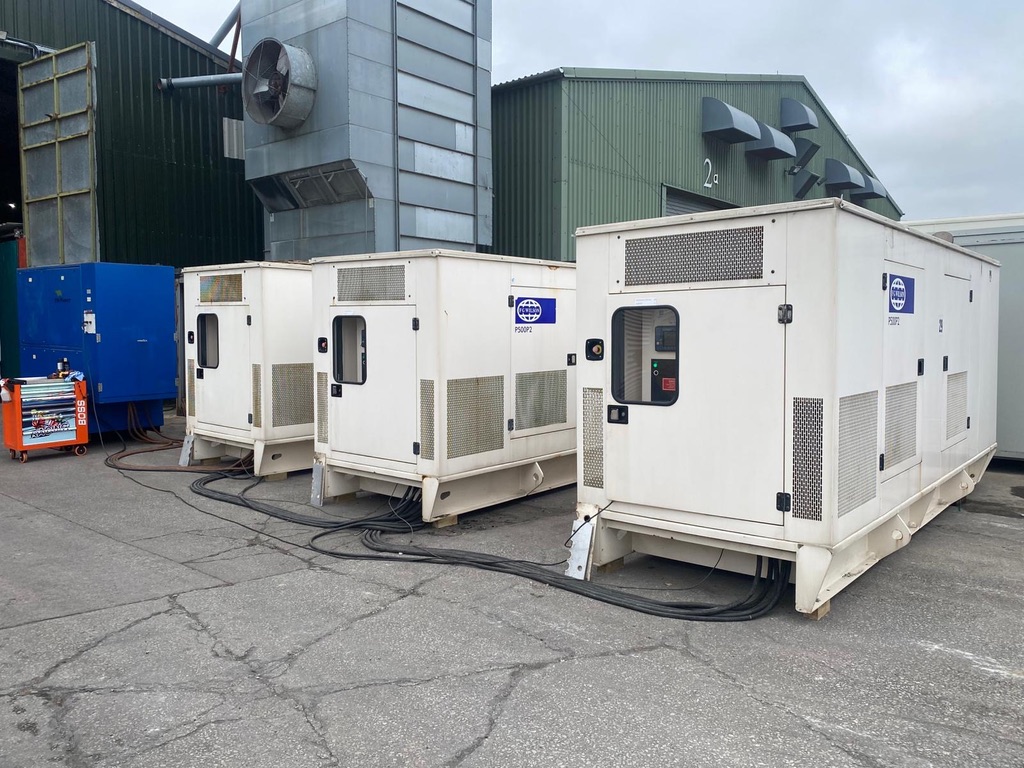
A synchronised generator package connects two or more compatible generating sets to a common electrical busbar so they can supply a load together. It is also called a parallel generator system, generator paralleling or a multi-set load-sharing system.

The controls check voltage, frequency, phase sequence and phase angle before allowing an incoming generator to connect to an energised bus.
Compatible engine-governor and alternator-voltage controls coordinate real power (kW) and reactive power (kVAr) sharing. The machines work as an integrated system.
Where specified, load-demand control brings sets online or takes them offline as demand changes, while maintaining the agreed reserve capacity and operating limits.
Synchronisation is more than connecting cables. The generators, controllers, breakers, protection, earthing and site distribution must be assessed together. An ordinary automatic transfer switch changes between supplies; it does not, by itself, make generators operate in parallel.
The strongest package is the one that answers your operational priorities. That might be increased output, planned maintenance access, an expansion programme or a better match to a variable load.
Several sets can contribute to the same supply. This gives your team another option to compare with a single larger generator, especially when delivery access, equipment availability or space influence the choice.
Additional generating capacity can provide an allowance for a set being unavailable. The remaining machines must still meet the required load; merely owning two generators does not establish N+1 resilience.
When demand falls, an appropriately configured system may need fewer engines running. Any fuel saving depends on the load profile, reserve policy and the individual machines' consumption curves.
A package can be designed so a machine can be isolated for service while sufficient capacity remains available. Safe isolation arrangements and the load supported during maintenance need to be agreed in advance.
Future generating capacity can be considered from the start. Allowing for extra switchgear ways, control capability, space and cable routes is more useful than assuming another set can simply be added later.
Compare a matched new package with suitable used machines, or ask us to assess integration with an existing set. Our team can explain the practical differences in compatibility, preparation, scope and cost.
We start with what you need the system to do. We can discuss generator selection, synchronising controls and the supporting equipment as a coordinated proposal, with supply, installation and support responsibilities clearly defined.
Discuss a matched specification using new diesel generators, with the ratings, enclosure, controls and expansion requirements considered together. Ask about Blackwell generator options and other suitable equipment.
Our team can assess used generator stock for a multi-set proposal. Condition, service history, available controls and testing all matter. Machines are selected for suitability rather than output alone; availability is confirmed on enquiry.
Already have equipment on site? Send us its nameplate, controller and alternator details. We can discuss whether an expansion or retrofit assessment is appropriate and what information the engineering review will need.
Discuss the required response to mains failure, the load sequence and which services must remain available. Automatic mains failure control, transfer equipment and the generator package must form one agreed operating plan.
For sites relying on generators as their regular supply, operating hours, fuel logistics and service access are central to the proposal. Use the appropriate prime rating and a realistic demand profile.
Synchronising sets with each other is different from paralleling with the public electricity network. Mains-parallel operation requires the relevant network operator's agreement and applicable connection, interface-protection and testing requirements, including G99 where applicable.
Discuss mains-parallel or closed-transition requirements early. Do not assume a generator-to-generator package includes grid connection approval, export capability or uninterrupted transfer.
N is the generating capacity needed to support the defined load. +1 is one additional generating unit, allowing a unit to be unavailable while the remaining capacity still covers that requirement.
Begin with running kW and kVA, power factor, the largest starting load and any load steps. Then assess the applicable prime or standby rating, ambient conditions, reserve margin and the capacity required with a set out of service.
Our team can help compare the options. Read our guide to prime and standby generator ratings before comparing headline kVA figures.
Whether you are planning a UK installation or purchasing for export, FW Power can bring generator selection and practical project coordination into the same discussion.
Tell us what the generators will support, the consequence of a power loss, your timescale and whether the system is standby or prime power.
Review new or used equipment, equal or different set sizes where compatible, operating sequences, controls and the scope of switchgear and fuel provision.
Confirm what is included: equipment preparation, transport, site works, cabling, installation, testing, commissioning and operator handover, as required.
Discuss maintenance access, service intervals, test arrangements and documentation. Explore our generator service and maintenance support.
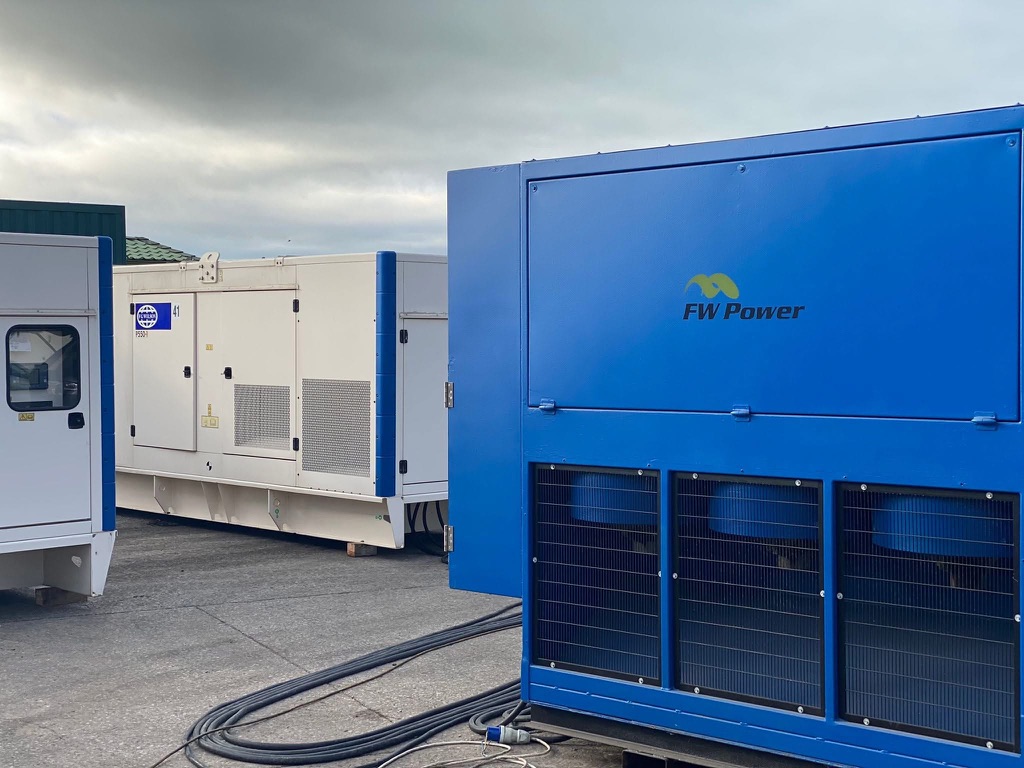
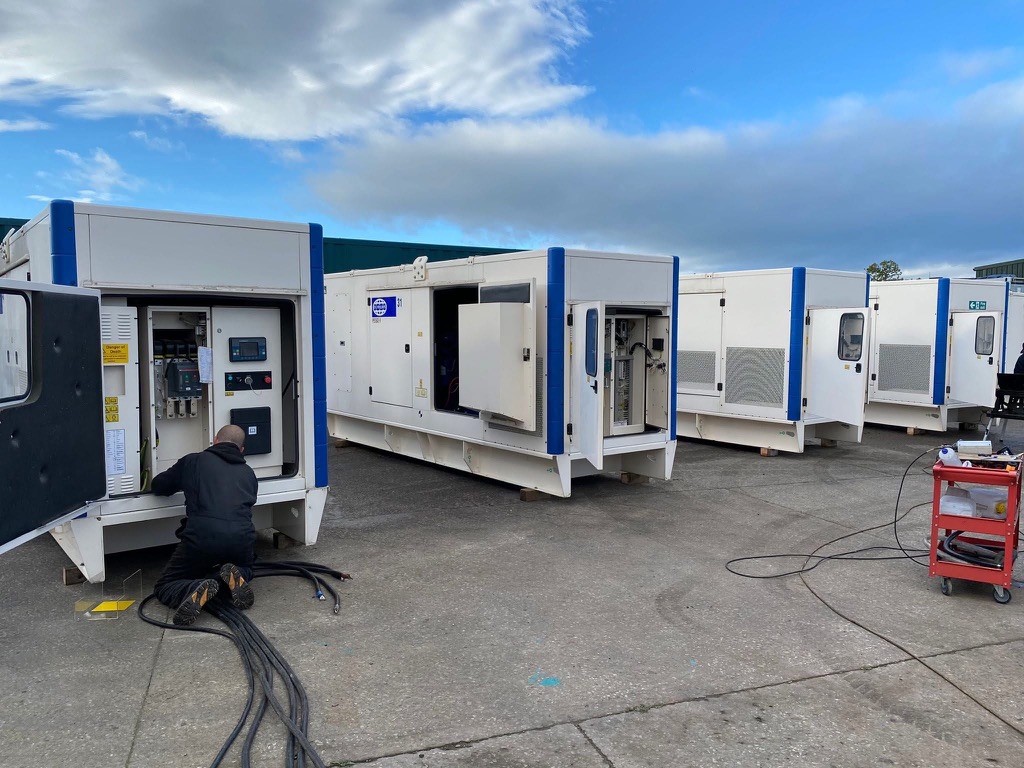
In our documented synchronisation project, the team configured three Perkins-powered FG Wilson P500P2 generators with ComAp equipment and completed load bank testing ahead of dispatch to an export customer.
It is a practical example of preparing multiple machines to work together. Your own package will be assessed against its specific equipment and operating requirements.
Read the synchronisation projectAsk us about the appropriate load bank testing and commissioning scope. Depending on the agreed design, checks may cover synchronisation, load sharing, load steps, start and stop sequences, alarms, protection and the response to an unavailable set. Define the acceptance criteria and handover records before the equipment is needed on site.
Manufacturing, logistics, agriculture and critical facilities can have very different power priorities. The right discussion starts with the site's loads and operating risks.
Useful points to establish before requesting a quotation or comparing generator packages.
Potentially, but compatibility must be established. Controllers, engine governors, alternator voltage regulators, protection and communications all need review. Different ratings require an appropriate load-sharing strategy. Send FW Power the exact equipment details before assuming two sets can be combined.
No. An ordinary open-transition ATS selects between alternative supplies, disconnecting one before connecting the other. A synchronised package allows compatible generators to supply a common bus together. A site may need both functions, with the switching and controls designed as a complete system.
Only as a first indication of installed capacity when comparing the same duty rating. Usable capacity must also respect the kW limits, power factor, ambient derating, starting demands, switchgear and cabling, and the reserve needed with a generator unavailable. Do not add standby ratings and treat the result as continuous prime output.
No. A potential saving comes from matching the number of running sets to demand and the equipment's operating characteristics. Compare consumption at the expected load points, including the reserve capacity you need online. A resilience-led design may deliberately keep more machines running.
No. N+1 describes spare generating capacity, not a guarantee of uninterrupted power. Starting time, transfer arrangements, failure response and shared infrastructure still matter. Loads that cannot tolerate an interruption may need a UPS or another engineered continuity solution alongside the generator system.
We can discuss selected used equipment and export package options, subject to availability and suitability. Tell us the destination, required voltage and frequency, duty, environmental conditions and any local documentation requirements. Preparation, logistics, installation responsibilities and support are agreed in the quotation.
Price depends on the number and size of sets, new or used equipment, controls, switchgear, enclosure and fuel arrangements, and the delivery and commissioning scope. Provide a project brief so our team can compare suitable options and prepare a meaningful quotation.
You do not need a finished design to start a conversation. Send us your load information and project outline. Our team can discuss synchronised generator package options and what needs to be established for a meaningful quotation.
Meet the teamTell us what you need to power. We’ll help you find the right solution.
